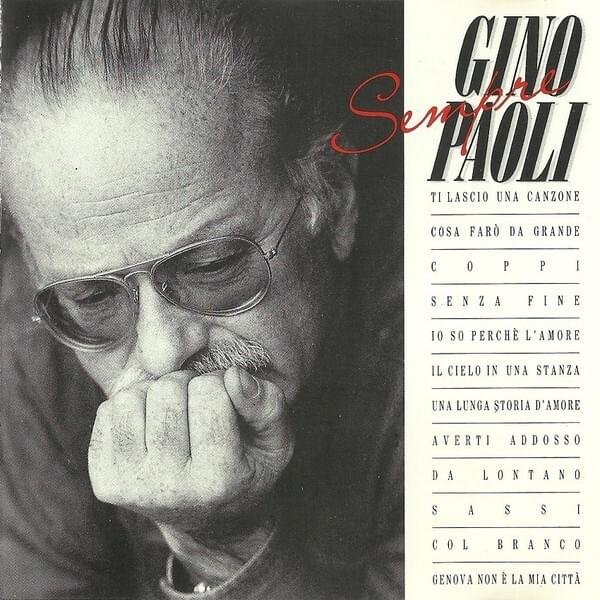
Gino Paoli's "Una Lunga Storia D'amore": Legacy of a Hit Song and Its Enduring Narrative
The landscape of Italian music is rich with evocative storytelling, and few artists have woven tales of love and longing with the depth and nuance of Gino Paoli. Among his most celebrated works stands "Una Lunga Storia D'amore," a track that transcends mere melody to paint a vivid picture of a relationship's intricate dance. While the original bears the definite article "Una" (A), its essence is often invoked through the slightly more personal "Questa Lunga Storia D'amore," a title that has come to represent not just a song, but an entire emotional journey. This article delves into the legacy of Paoli's iconic hit, exploring its lyrical depth, its historical context, and why its portrayal of complex affection continues to resonate deeply with audiences decades later.
The Genesis of a Classic: Gino Paoli's 1984 Masterpiece
Gino Paoli, a titan of Italian songwriting, released "Una Lunga Storia D'amore" in 1984. The song was a pivotal track on his album, "Appunti di un lungo viaggio" (Notes from a Long Journey), an album that marked a significant moment in his illustrious career. From its debut, the song captivated listeners with its heartfelt melody and its deeply introspective lyrics, quickly solidifying its place as one of Paoli's most famous and beloved compositions. Its instant appeal lay in its universal theme – the slow, often turbulent, evolution of love – presented with Paoli's characteristic poetic flair and unvarnished honesty. The track’s success was immediate, becoming a staple on Italian radio and a favorite in the hearts of fans, cementing its status as a timeless classic in the Italian musical canon.
Unpacking the Lyrics: A Tale of Ambiguous Affection and Enduring Connection
At the heart of "Una Lunga Storia D'amore" is a narrative far removed from typical romantic clichés. It portrays a relationship that blossoms not from immediate infatuation, but from a gradual, almost reluctant, acceptance of profound connection. The story, recounted from the male protagonist's perspective, begins with skepticism. He observes her – "those clear, impenetrable, cheerful eyes," her somewhat "awkward way of moving," "arms too long," hair "pulled up grossly, like a pillow." He doesn't believe he could ever love her; it's "too hot to hold close" on that August afternoon.
Yet, despite his initial dismissal, something compels him to stay. He finds that hours spent with her are "never wasted." An inexplicable jealousy stirs within him. He rationalizes it, believing it will be fleeting – "a couple of months of smiles, perhaps sex, then it would end." But months turn into three, then four, five, and still, he claims, he doesn't love her. Meanwhile, she is "crazy about him," devouring him with her gaze, her affection palpable and undeniable. He feels undeserving of such unreciprocated devotion.
Their days are a mosaic of mundane intimacy: long conversations where they never agree, contrasting in their dispositions – "she full of shadows, he stubborn." He finds himself playing with her hair, a peculiar pleasure in twirling a strand that falls over her ear. They eat pizza, they study each other, all "without loving each other," or so he believes. The approaching colder months bring a shift. In September, October, November, as the chill sets in, she finally takes courage and utters two simple, direct words: "Ti amo." A sudden downpour, an expected confession. His internal response is conflicted: does he love her? Perhaps not. Could he ever? He doesn't know what love is. His reaction is telling – he doesn't answer with words, but with a gaze, a kiss, a smile.
By January, the cold becomes an excuse for closeness – "too cold not to hold tight." Their afternoons are spent amidst "crumpled sheets, pillows thrown in a corner." He still maintains he doesn't love her, yet his dependence is undeniable. He needs her; without her, he's "unhappy." He doesn't desire her, but during lovemaking, he "can't be distracted." Days without her are "interminable"; he seeks her, demands her, allows her "no room to breathe." He consumes every facet of her, demanding complete transparency, even as he remains unable to reveal his own vulnerabilities or deepest secrets. He notices her "shadow of melancholy" but stops her with his "proud, hard, immovable gaze" from delving deeper into his complexities.
This intricate portrayal of a man grappling with his own feelings, needing someone he claims not to love, yet possessive and deeply affected by her presence, is what gives "Una Lunga Storia D'amore" its profound resonance. It’s a raw, honest look at the messy, beautiful reality of human connection, where love isn't always a clear, immediate declaration, but a convoluted journey of need, intimacy, and unspoken understanding. For those exploring such emotional depths, an examination into
Unraveling the Complex Love in Questa Lunga Storia D'amore can offer further insights.
The Enduring Appeal of "Questa Lunga Storia D'amore"
The song's enduring appeal lies in its authenticity. It speaks to the universal experience of love that isn't perfect or straightforward but deeply human. Many listeners find themselves in the characters' struggles, in the unspoken words, and in the undeniable pull between two people, even when one is more outwardly expressive than the other. The nuanced emotional landscape painted by Paoli allows for multiple interpretations, making it a song that grows with the listener and reveals new layers with each hearing.
The shift from "Una" to "Questa Lunga Storia D'amore" in popular discourse, and particularly in instrumental covers like Giulia Malaspina's, is subtle but significant. "Una" denotes "a" or "one," making the story universal. "Questa," meaning "this," imbues the title with a more personal, immediate, and perhaps definitive quality. It suggests *this specific* long love story, making it feel more tangible and relatable. This slight linguistic tweak personalizes the narrative, inviting listeners to see their own experiences reflected in the song's intricate tapestry. This fascinating aspect of the title is further explored in
Questa Lunga Storia D'amore: How One Title Holds Multiple Meanings.
The song's melodic simplicity, combined with Paoli's distinctive voice, creates an atmosphere of intimacy and reflection that perfectly complements its lyrical complexity. It's a song that can be enjoyed purely for its musical beauty, yet rewards those who delve into its narrative depths.
Gino Paoli's Legacy and Songwriting Mastery
Gino Paoli's career is marked by a consistent ability to capture the intricacies of human emotion in song. His works often delve into themes of love, melancholy, and existential reflection with a poetic sensibility that sets him apart. "Una Lunga Storia D'amore" is a testament to his mastery. It showcases his ability to tell a compelling story, to sketch characters with a few strokes, and to evoke profound feelings without resorting to melodrama.
Paoli's influence extends beyond just his hits. He is revered for his contribution to the *Scuola Genovese* (Genoese School) of singer-songwriters, which revolutionized Italian popular music by bringing a literary quality to lyrics and a more intimate, reflective style to performance. "Una Lunga Storia D'amore" stands as a prime example of this legacy, proving that popular music can be both commercially successful and artistically profound.
The timeless nature of the song also stems from its ability to offer practical insight into relationships. It suggests that love isn't always a bolt from the blue; it can be a slow, sometimes painful, realization. It highlights that need can intertwine with affection, and that vulnerability is often a struggle, even in the deepest connections. For couples navigating similar waters, Paoli's narrative offers a poignant reflection on the complexities of true intimacy.
Conclusion
"Una Lunga Storia D'amore" by Gino Paoli, often referred to by its personalized variant "Questa Lunga Storia D'amore," remains a powerful and poignant exploration of love's multifaceted nature. From its hesitant beginnings to its eventual, undeniable entanglement, the song captures the messy, beautiful reality of human connection. It's a testament to Gino Paoli's genius as a storyteller and musician, whose work continues to offer solace, understanding, and a mirror to the complex dance of emotions that define our deepest relationships. Its legacy is not just in its melody or its fame, but in its profound ability to articulate the unarticulated truths of the heart, making it an eternal classic for generations of listeners.